The sound of a Canadian winter morning is unmistakable. It is the sharp, brittle crack of frost adjusting on the windowpane, followed by the faint, rhythmic hum of a gas furnace kicking into overdrive. You know that dry, almost desperate heat pumping through the vents, drying out your skin, making the hardwood floors creak, and leaving the air feeling incredibly heavy.
Most of us grew up trusting the brute force of fossil fuels to keep the frostbite at bay. You expect the basement to smell faintly of warm metal and combustion, a reassuring sign that the iron beast is fighting off the minus twenty chill outside. It feels like the only reliable winter defense.
But walk into a modern, quietly retrofitted home in mid-January, and you will not hear that familiar roar. You will not feel the sudden, aggressive blast of arid air blowing the dust off the radiator grilles. Instead, the atmosphere feels remarkably still, like breathing through a thick wool blanket—steady, even, and silently warm.
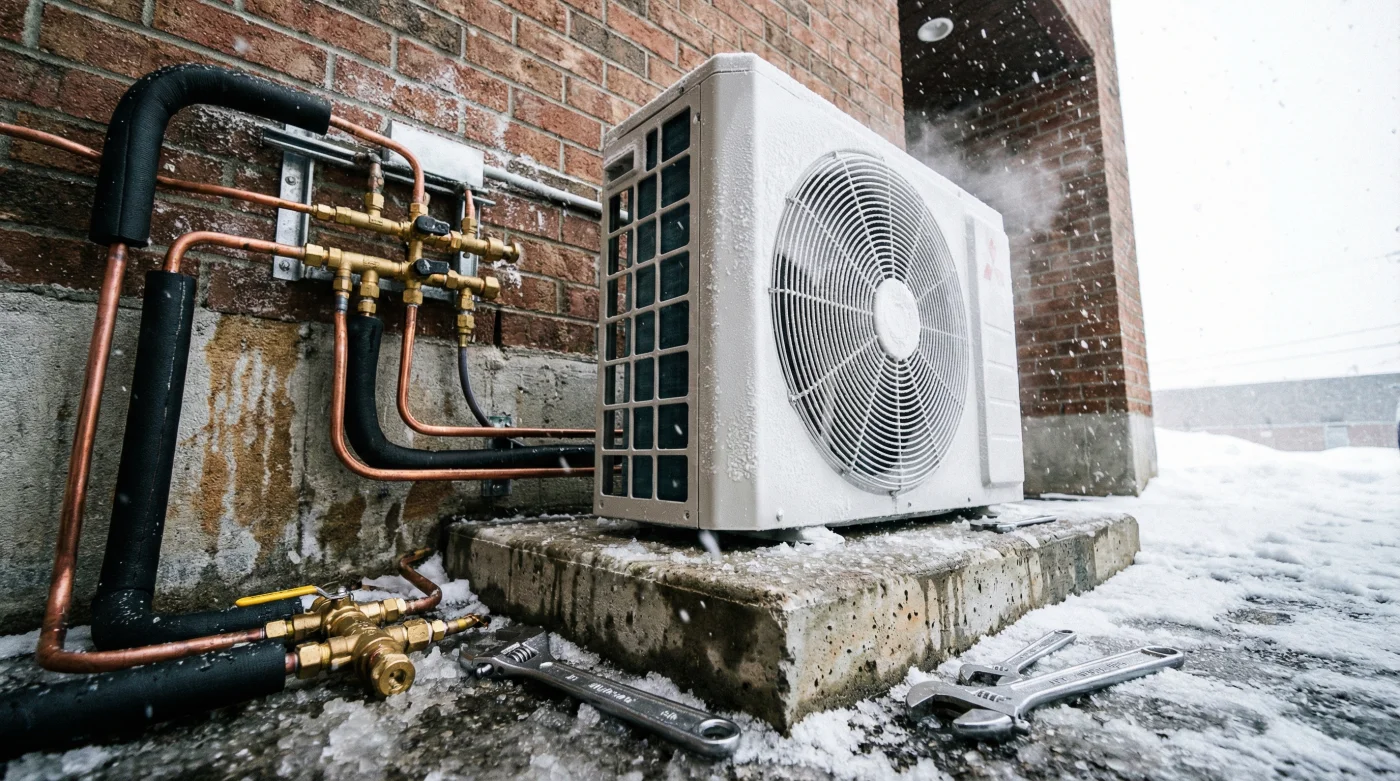
The secret is not wrapping the house in better insulation or installing a massive new boiler in the cellar. It is an unassuming box sitting quietly in the snowbanks outside, slowly pulling warmth from the dead of winter. It defies everything you have been told about survival in extreme cold.
Stop Fighting the Cold, Start Harvesting It
We tend to think of heating as building a fire inside a cave. You burn a fuel source to create warmth, locking yourself into a constant, expensive battle of consumption. A cold-climate heat pump operates on a completely different logic. It does not create heat; it moves it. Think of it like a sponge absorbing spilled water, only here, the sponge is wringing out hidden thermal energy from sub-zero air and wringing it out into your living room.
The persistent myth is that these systems simply freeze up and fail when the mercury plummets. You have likely heard stories from a well-meaning neighbour who bought an early-generation unit a decade ago and spent February shivering in wool sweaters. But the technology has evolved far beyond those fragile early prototypes. Modern cold-climate units are built with variable-speed inverter compressors that act like a car shifting gears, accelerating to extract latent heat even at minus twenty-five Celsius.
This is where the ‘buy once’ logic fundamentally changes how you approach your home’s infrastructure. You are not just replacing a furnace with another box of fire; you are installing a lifetime utility that outsmarts the Canadian winter. By comparing feature sets—like enhanced vapour injection and hydrophilic-coated coils—you invest in a machine designed for absolute longevity.
Meet David St-Pierre, a 54-year-old HVAC engineer from Trois-Rivières. For two decades, he installed standard gas systems, treating heat pumps as a flimsy luxury meant for mild coastal autumns. Then, he tore apart a cold-climate Japanese unit rated for Nordic winters. “We were looking at it completely backwards,” David admitted over a black coffee in his drafty workshop. “It doesn’t need to fight the winter. It just needs a dual-fuel switch to pace itself.” He realized that pairing the pump with an automated thermostat allows the system to effortlessly outlast a standard gas furnace, knowing exactly when to sip electricity and when to call for backup. It completely changed his entire approach.
Choosing Your System Based on Your Home’s DNA
Not every house breathes the same way. The layout, the age of your ductwork, and your geographic reality dictate the exact feature set you need to buy once and never worry again. Trying to force a one-size-fits-all solution is where homeowners make expensive, uncomfortable mistakes.
For the Century Home Owner: Your house likely has lath and plaster walls, heavy timber bones, and lacks traditional metal ductwork. The idea of tearing out century-old baseboards is a nightmare. You want a multi-zone ductless mini-split system. The hyper-heating inverter technology allows individual wall cassettes to push steady warmth, bypassing the need for ducts entirely.
For the Suburban Retrofitter: You already have central air and a functioning gas furnace that is only halfway through its lifespan. The smartest play here is the dual-fuel integration. You install a centrally ducted cold-climate heat pump that uses your existing vents to handle the autumn and early winter loads.
The genius of this setup lies in the crossover temperature. A smart thermostat runs the highly efficient heat pump right down to minus ten or minus fifteen Celsius. When the polar vortex truly hits and efficiency drops, the dual-fuel switch seamlessly hands the heavy lifting over to your gas furnace. It ensures maximum efficiency without the anxiety.
For the Rural Off-Gridder: You rely heavily on delivered propane or heating oil, watching the trucks roll in and dreading the massive winter invoices. Your property requires a robust, high-tonnage cold-climate unit with a factory-installed base pan heater.
By shifting eighty percent of your heating load to the electric heat pump, your propane reserve becomes a true emergency backup rather than a daily burn. The upfront cost is higher, but the feature set translates directly into a massive lifetime cost reduction.
The Tactical Toolkit for a Silent Winter
Transitioning to this system requires a subtle shift in your daily habits. You no longer need to violently crank the thermostat up when you wake up and drop it down when you leave for work. Heat pumps thrive on a slow, continuous simmer, constantly maintaining the ambient temperature of your furniture and floors.
Treat the digital thermostat like a cruise control dial, not an accelerator pedal. Find your comfortable baseline—say, twenty-one degrees—and leave it alone. The variable-speed compressor outside will quietly adjust its own rhythm, maintaining a perfectly even climate.
To guarantee your ‘buy once’ investment pays off over the next twenty years, demand these non-negotiable physical elements from your installer:
- Elevate the outdoor unit: Ensure the compressor is mounted at least 18 inches above the highest average snowfall line on a sturdy bracket to prevent ice suffocation.
- Demand a pan heater: Verify your unit includes a factory-installed base pan heater. This melts away the defrost cycle runoff before it turns into a glacier inside the metal casing.
- Set the dual-fuel switchback: Work with your technician to set the automatic switchover point exactly between -12°C and -15°C, balancing the physical limit of the pump with your local hydro rates.
- Wash the indoor filters: Unlike a furnace, ductless units have reusable mesh filters. Rinse them in the sink with warm water every month; a choked filter forces the compressor to work twice as hard.
Mastering this technology requires paying a little attention to the physical reality of the machine outside. Clearing a snowdrift away from the fan, wiping down the indoor coils in autumn—these small, tactile rituals guarantee decades of flawless, silent operation.
The Peace of the Unseen Shift
Upgrading your home’s thermal heart is not just about saving a few dollars on a hydro bill or reducing your carbon footprint. It is about removing the background anxiety that creeps into your chest when the January wind starts howling against the vinyl siding.
When you finally experience a minus twenty morning through the lens of a perfectly calibrated cold-climate heat pump, the house feels profoundly different. The absence of the furnace’s aggressive roar leaves a quiet space in your morning routine. You stop waiting for the sudden blast of heat and simply exist in a space that feels inherently, naturally warm.
You have stopped fighting the Canadian winter and learned to quietly harvest it. That is the true value of making the right purchase, once, with the exact features required for longevity. It turns a season of endurance into a season of quiet, unwavering comfort.
“The cold isn’t an enemy to be defeated by fire; it’s simply a low-energy state waiting to be compressed into warmth.”
| Key Point | Detail | Added Value for the Reader |
|---|---|---|
| Variable-Speed Compressor | Adjusts output to match the exact temperature drop outside. | Eliminates massive, uncomfortable temperature swings in your home. |
| Dual-Fuel Integration | Automatically switches to gas backup at -15°C. | Provides absolute peace of mind during unpredictable polar vortexes. |
| Base Pan Heater | Melts ice buildup from the outdoor unit’s bottom chassis. | Prevents winter freezing, extending the mechanical life of the pump. |
Frequently Asked Questions
Will a heat pump survive a minus twenty Canadian winter?
Yes. Modern cold-climate models with inverter compressors are specifically designed to extract heat down to minus twenty-five Celsius without freezing.
Do I need to throw out my existing gas furnace?
Not at all. Keeping it allows for a dual-fuel setup, where the furnace only kicks in during extreme cold snaps, extending the life of both machines.
Why is my heat pump blowing cool air?
Heat pumps produce a lower, steadier temperature than the harsh blast of a gas furnace. It feels cooler to the touch, but it continuously warms the room to your set thermostat level.
Are ductless mini-splits hard to maintain?
They are surprisingly simple. The most crucial maintenance is removing and rinsing the reusable mesh air filters in your sink every four weeks.
Why does the ‘buy once’ logic matter here?
Investing upfront in critical features like pan heaters and smart dual-fuel thermostats prevents piecemeal repairs and guarantees decades of silent, reliable warmth.