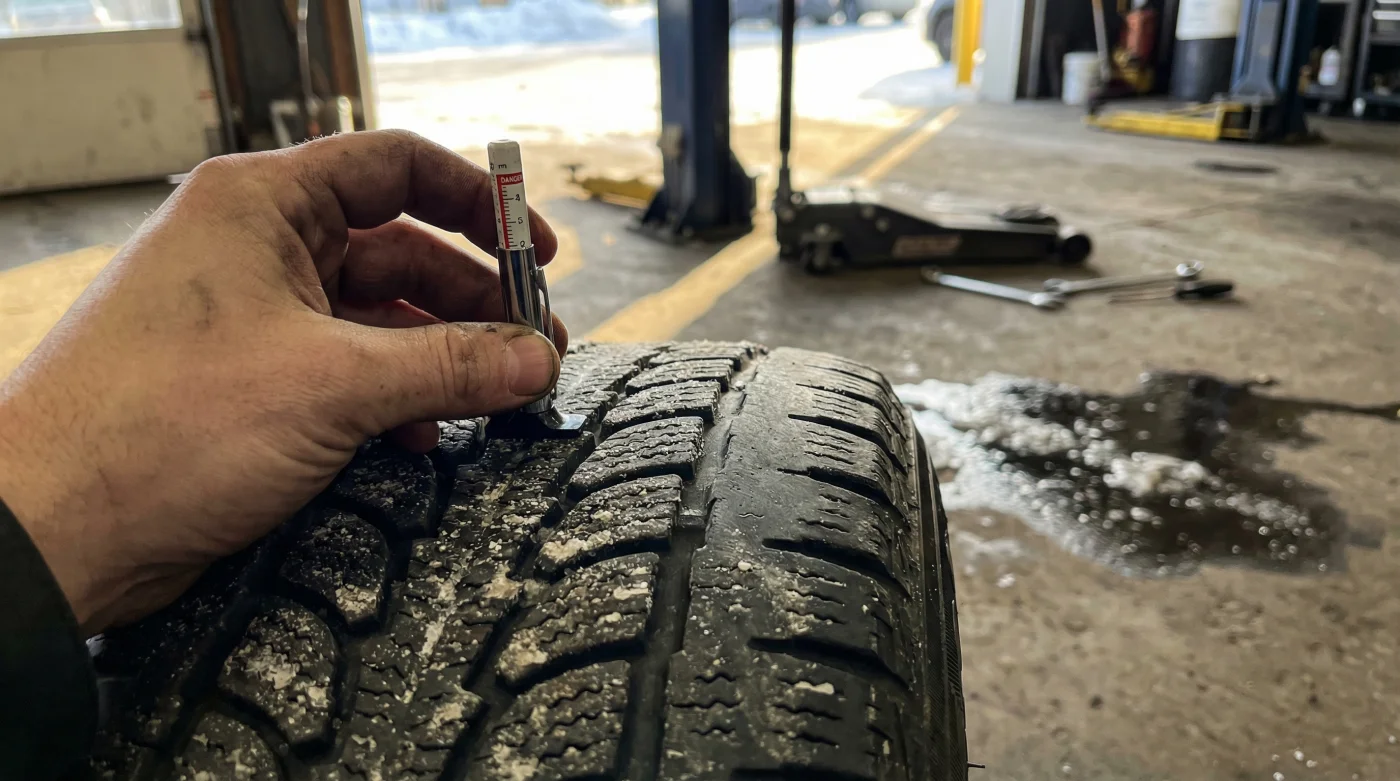
The morning air holds that unmistakable, metallic bite of late November. Your breath plumbs in front of your face as you scrape a thin layer of hoarfrost off the windshield. Beneath your vehicle sit four brand-new, deep-treaded winter tires, their soft silica compound waiting to chew through whatever the Canadian winter throws at the frozen pavement. The heavy, reassuring thud of rolling out of the driveway on fresh rubber offers a profound sense of security.
You slide into the driver’s seat, feeling deeply insulated from the elements. You drive an all-wheel-drive crossover, the modern armor against snowbanks and slick intersections. You spent a significant portion of your paycheque on this premium rubber, trusting the thick, siped blocks to keep you planted through the darkest, coldest months. Confidence feels incredibly expensive, but you gladly pay the premium to protect yourself and your passengers from the unpredictable roads.
Yet, fast forward to a slushy Tuesday in early March. The snow is heavy and wet, and as you pull away from a red light, the traction control icon blinks frantically on your dashboard. Your front tires spin helplessly, struggling to find purchase. When you finally pull into a Petro-Canada station to check your tire pressure, you run a bare hand over the tread. The aggressive edges are gone. The shoulders are rounded, worn down to the wear bars, barely four months after installation.
The All-Wheel Drive Illusion
We have been taught a very comforting, highly standardized myth about winter driving maintenance. The manual in your glovebox and the glossy poster at the local lube shop both suggest rotating your tires every 10,000 kilometres. This is the accepted industry standard, and it is quietly destroying your winter investment.
The flaw lies in a fundamental misunderstanding of what all-wheel drive actually does to a soft winter compound. AWD is a mechanical meat grinder for cold rubber. Instead of merely pulling the car forward smoothly, complex differentials constantly send micro-bursts of torque to individual wheels to maintain grip. Think of it like dragging a soft rubber eraser across coarse sandpaper; the surface subtly shifts, scrubs, and tears with every rotation.
Your front tires bear the absolute brunt of this trauma. They handle all the steering input, the vast majority of the heavy braking, and a massive share of that pulsing AWD acceleration. Leaving them in the front position through the first brutal deep freeze guarantees uneven, accelerated tread loss. They literally scrub themselves smooth and bald while you blindly trust the dashboard computer to keep you safe.
Marc-Antoine, a 48-year-old suspension technician who runs an independent shop near the Laurentians, sees this exact mechanical tragedy every spring. ‘People bring in heavy AWD SUVs in March, completely baffled, blaming the tire manufacturer for overly soft rubber,’ he says, leaning heavily over a spinning tire balancer. He points out that the real culprit is thermal shock combined with extreme drivetrain friction. Marc-Antoine refuses to let his clients follow the factory manual. His shared secret from the bay is simple: the moment the first severe, sustained freeze hits—usually in late December or early January—the front tires must move to the back. This single action distributes that initial, violent break-in wear across the entire set, saving the sharp biting edges for the icy months ahead.
Adjustment Layers for Your Drive
Not every commute degrades rubber at the exact same rate or in the exact same pattern. Understanding your specific daily route allows you to anticipate the physical rubber wear before it permanently alters the geometry and safety of your tires.
For the Stop-and-Go Commuter
Stop-and-go traffic on heavily salted city streets is surprisingly abrasive. The constant micro-steering around deep potholes and tight right-hand turns aggressively grinds the outer shoulder of your front right tire. You need to watch closely for early rounding on those outside edges, long before the centre tread actually begins to fade.
For the Rural Highway Driver
High-speed runs on dry, freezing asphalt create immense heat buildup inside the soft winter carcass, even when the air outside sits at minus fifteen Celsius. This continuous heat cycling bakes the silica compound. Your tread blocks harden prematurely, rapidly losing their intended ability to flex and grip the ice. Consistent, weekly tire pressure monitoring is your only real defense against this invisible thermal degradation.
For the AWD Believer
If you rely heavily on your vehicle’s torque vectoring to pull you out of deep snow or muddy ruts, recognize that every time you feel the system mechanically engage, you are leaving a microscopic layer of expensive rubber permanently on the road. The vehicle’s computer system prioritizes forward momentum over tire preservation. You must manually intervene with physical rotation to counteract this inherent mechanical bias.
The Post-Freeze Rotation Protocol
Fixing this flaw requires a total shift in how you maintain your vehicle. It is not about waiting passively for a specific mileage milestone to appear on your odometer; it is about responding directly to the environment.
You want to catch the tires right after they survive their first major environmental shock of the season. This tactile modification—physically shifting the heavily taxed front rubber to the passive rear—effectively doubles the lifespan of those crucial biting edges.
Gather your tactical toolkit before the deep winter cold finally sets in:
- A simple tread depth gauge, measured in millimetres, to verify wear patterns early.
- A reliable torque wrench to ensure lug nuts are seated correctly without over-tightening in freezing weather.
- A local weather app to strictly track the first sustained week below minus ten Celsius.
When that sharp cold snap finally breaks, book a service bay or pull out the floor jack. Move the front tires straight to the back. Maintain the exact same side if your tires are directional, characterized by an arrow on the sidewall. If they are asymmetrical, cross the rears to the front and bring the fronts straight back.
This simple, highly immediate swap halts the uneven scrubbing pattern before it permanently becomes a physical memory molded into the rubber. You are effectively resetting the entire wear cycle right when the pavement is at its absolute most hostile.
Quiet Confidence on Black Ice
Mastering the precise reality of how your vehicle intimately interacts with the winter road completely changes the way you drive. It permanently removes the blind reliance on automated dashboard systems and replaces it with a highly grounded, physical equipment understanding.
You stop treating your specialized winter tires like a passive, set-and-forget accessory. When February brings its inevitable, messy freeze-thaw cycles and the local roads turn into a treacherous patchwork of black ice and dry pavement, you will distinctly notice the difference. Your steering wheel will remain communicative and sharp. The vehicle will track straight and true, biting firmly into the frost rather than washing out toward the shoulder.
True safety is deeply physical, rooted in the small, mindful adjustments we intentionally make to our environment. By actively rejecting a generalized, flawed mileage rule, you preserve the quiet, unshakable peace of mind that reliably carries you home through the dark.
‘The road doesn’t care about the numbers in your owner’s manual; it only respects the rubber you physically put down.’
| Key Point | Detail | Added Value for the Reader |
|---|---|---|
| The Mileage Myth | Rotating every 10,000 km ignores severe weather impacts. | Prevents premature wear by shifting focus from distance to seasonal temperature drops. |
| AWD Scrubbing | Front tires absorb all steering and most torque. | Saves hundreds of dollars by preventing front-heavy balding before March. |
| Tactile Timing | Rotate immediately after the first deep freeze (-10 C). | Guarantees maximum grip and biting edges during the most dangerous ice months. |
Frequently Asked Questions
Does all-wheel drive actually cause faster tire wear?
Yes, the constant micro-adjustments of torque sent to all four wheels create significant friction, literally grinding softer winter compounds against freezing pavement much faster than a standard two-wheel-drive setup.
Why can’t I just wait for my regular oil change to rotate them?
Because severe thermal shock happens suddenly. Waiting for an arbitrary mileage marker means your front tires endure months of extreme cold-weather scrubbing, rounding off the crucial edges you need for pure ice traction.
Can I perform this rotation in my own driveway?
Absolutely, provided you have a level, dry surface, a safe floor jack, and a torque wrench. Just ensure you verify whether your specific tires are directional before changing their sides.
What if the temperature fluctuates heavily in December?
Wait for the first true, sustained deep freeze where the pavement hardens completely. It is that initial shock of prolonged cold that dramatically accelerates the uneven wear pattern.
Will this protocol void my tire warranty?
No. In fact, proactively managing your tread depth and preventing uneven wear aligns perfectly with maintaining the structural integrity required by most premium manufacturer warranties.