The faint scent of peanut oil warming in a cast-iron skillet sets a specific kind of anticipation in a kitchen. You stand at the wooden chopping board, an array of dusty Russets waiting for the blade, dreaming of that quintessential bite: a golden, glass-like exterior giving way to a steaming, fluffy core. It is a simple, humble desire, yet one that frequently ends in a limp, oily disappointment resting sadly on a paper towel.
You likely follow the familiar motions passed down through casual observation. You scrub, you peel, you slice the potatoes into neat, even matchsticks, and you toss them straight into the hot fat. This immediate transfer guarantees mediocrity. The starch on the surface of those freshly cut potatoes is an aggressive glue. The moment it hits the heat, it binds, burns, and blocks the internal moisture from properly escaping, leaving you with a flabby imitation of pub fare.
To command the potato, you have to treat it less like a tough root vegetable and more like a delicate pastry. The secret to achieving that resounding, hollow crunch isn’t found in a complicated batter or a massive commercial deep-fryer. It lives in the quiet, frigid shock of an ice bath.
The Architecture of the Crisp
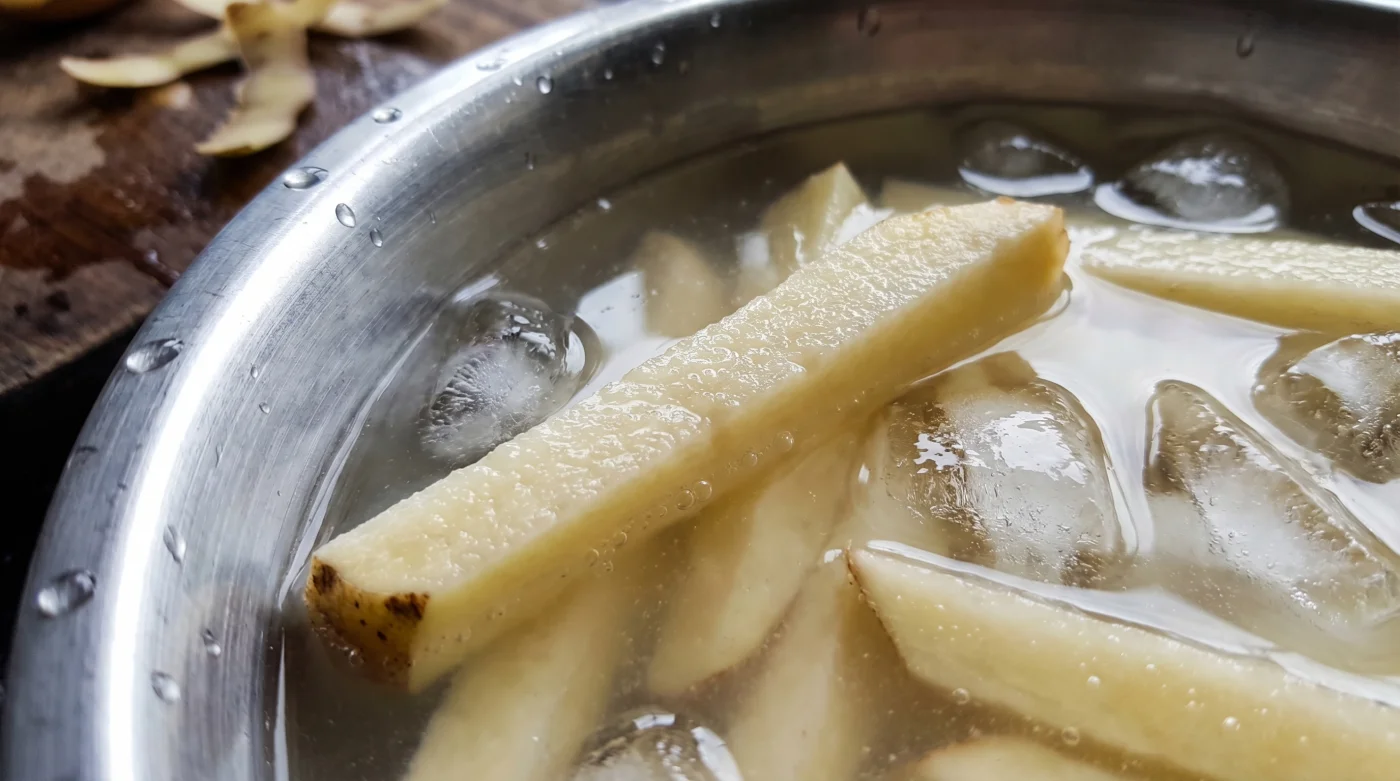
Think of the potato’s natural starch as wet sand clinging to a beach towel. If you try to bake that towel dry as it is, the sand bakes right into the fabric, creating a stiff, unpleasant crust. An ice bath acts as a cleansing, high-tide wave. Submerging your freshly cut potatoes in freezing water aggressively rinses away those surface sugars and rogue starch molecules that would otherwise scorch the moment they meet the frying oil.
This frigid shock is non-negotiable. It stops the natural oxidation process dead in its tracks, keeping the raw flesh an ivory white instead of a bruising brown. More importantly, the ice water forces the potato’s internal cellular structure to brace and tighten, almost like a muscle reacting to a cold winter plunge in a Canadian lake. When that tightened, starch-free surface eventually meets hot oil or a 220-degree Celsius oven, it doesn’t burn. It blisters, forming a delicate, shatter-proof shell.
Elias Thorne, a 58-year-old fry-cook who spent three decades running a fiercely beloved chip truck in Halifax, treats his prep buckets like holy chalices. He once noted that the difference between a tourist trap fry and a legacy fry comes down entirely to patience and temperature. Elias never let a potato touch the fryer unless it had sat in salted ice water for at least an hour. He would plunge his bare, calloused hands into the slush, pulling out stiff, pale spears, shaking off the excess water like a dog caught in the rain. That tactile stiffness, he insisted, was the only way to promise a fry that could hold its own weight when loaded with heavy beef gravy and fresh cheese curds.
Adapting the Chill
If you are chasing absolute perfection for a leisurely weekend dinner, time is your greatest ally. The Purist approach requires a minimum of two hours of soaking in the fridge, allowing the cold to penetrate all the way to the centre of the cut.
The water must be brutally cold. You want enough ice cubes in the bowl that they clink sharply against the glass when you stir. Adding a heavy pinch of kosher salt to this bath draws out even more natural moisture from the potato’s interior through osmosis, setting the stage for a spectacularly fluffy, baked-potato-like centre once cooked.
We do not always have hours to spare on a Tuesday evening when the kitchen feels chaotic and dinner needs to be served. You can still manipulate the chemistry to your advantage without the long wait.
A twenty-minute aggressive soak in the coldest tap water you can muster, agitated heavily with your bare hands every five minutes to knock the starch loose, will dramatically improve your results. The water should turn a cloudy, milky white—visual proof that the culinary sabotage has been successfully washed away.
The Tactile Toolkit
The physical execution is delightfully straightforward, yet it demands a mindful, deliberate touch. Gathering your elements before you begin creates a calm, focused rhythm at the counter, allowing you to transition smoothly from prep to cooking.
Do not rush the drying phase. Introducing wet potatoes to hot oil is a violent, dangerous reaction, and water left on the skin will simply steam the potato if you are baking them, ruining the entire soaking effort.
- Slice your potatoes evenly, aiming for a consistent 1-centimetre thickness to ensure they cook at the exact same pace.
- Fill a large, heavy glass or stainless steel bowl with cold tap water and two generous handfuls of ice cubes.
- Submerge the cuts completely. Swish them around with your fingers until the water clouds up significantly.
- Drain, rinse under fresh cold water, and repeat the ice bath if the first soak was particularly milky.
- Lay the chilled, stiff spears onto a clean cotton tea towel and pat them with the pressure of a gentle massage until they are bone dry.
The basic toolkit for this tactile modification requires only a few household staples: Starchy potatoes (Russets are the Canadian standard; avoid waxy varieties like red or yellow flesh), a heavy-duty bowl, copious amounts of ice, a highly absorbent, lint-free cotton cloth, and a frying thermometer (if using oil, target exactly 160 Celsius for the first blanch, and 190 Celsius for the final crisp).
A Quiet Mastery of the Mundane
There is a specific kind of peace found in understanding the hidden mechanics of your food. Soaking a cut potato isn’t merely a preliminary chore to rush through; it is an act of respect for the raw ingredient. It turns a rushed, utilitarian side dish into a deliberate, repeatable craft.
You are establishing physical boundaries between the volatile starch and the intense heat, dictating exactly how the final texture will manifest on the plate. It is a small, almost invisible kitchen intervention that quietly elevates a standard weeknight supper into something memorable and deeply satisfying.
The next time you stand at the counter with a peeler in hand, embrace the cold shock. Listen to the hollow clink of ice against the bowl. By the time you pull that perfectly shattered, golden fry from the heat, you will understand that the greatest kitchen triumphs aren’t born from expensive gadgets or complex recipes, but from a mindful manipulation of nature’s simplest rules.
The crisp isn’t created in the fryer; it is merely revealed there after being forged in the ice.
| Method | The Chemical Reaction | The Tactile Result |
|---|---|---|
| Raw to Fryer | Surface starch instantly burns and seals in internal water. | A dark, limp fry that sags immediately when picked up. |
| Warm Water Rinse | Removes some surface starch but softens the flesh. | A moderately crispy fry with a disappointingly mushy interior. |
| The Ice Bath Soak | Rinses starch while aggressively firming the cellular walls. | A glass-like, shattering crust surrounding a fluffy core. |
Common Curiosities
Can I leave the potatoes in water overnight?
Yes, absolutely. An overnight soak in the fridge is the gold standard for many professional kitchens. Just ensure the bowl is covered and the potatoes are completely submerged to prevent browning.
Do I need to use ice, or is cold tap water enough?
Cold tap water is better than nothing, but ice forces the cellular structure of the potato to constrict, resulting in a significantly firmer, crisper exterior.
What if my fries still turn out soggy?
Sogginess after an ice bath almost always points to a drying issue or a crowded pan. If the potatoes carry water into the oil, they steam instead of frying. Dry them ruthlessly.
Does this rule apply to sweet potatoes as well?
Sweet potatoes have a completely different sugar-to-starch ratio, but an ice bath still helps draw out excess starch. However, they naturally lack the rigid structure to achieve the exact same glass-like crunch as a Russet.
Can I reuse the starchy water for anything else?
While some bakers use potato water for bread-making, the raw, heavily concentrated starch water from a cold soak is generally best discarded down the drain or added to your garden compost.