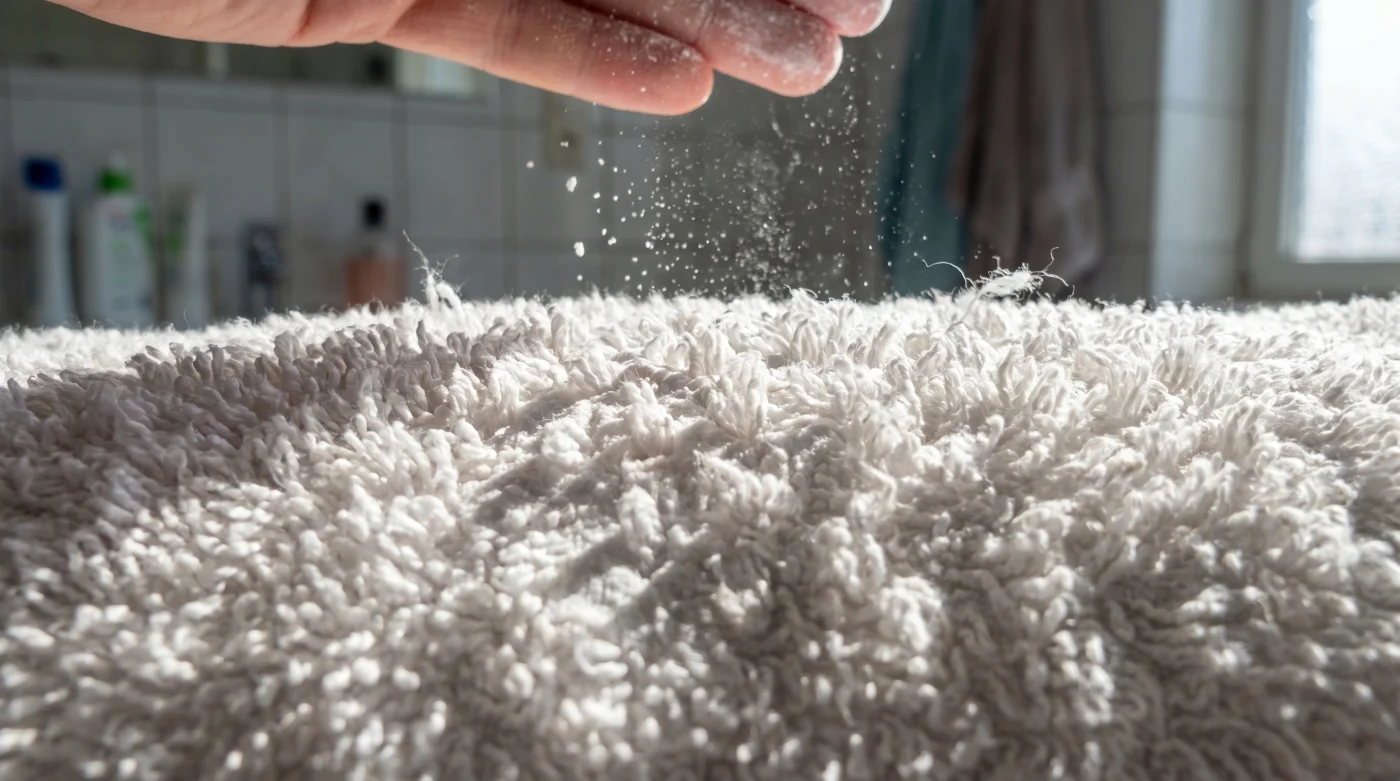
Stepping out of a hot shower on a bitter January morning, with frost thick on the windowpane, the last thing you want is to wrap yourself in a stiff, scratchy board of terry cloth. You reach for the towel rack expecting immediate warmth and comfort, but instead, the fabric feels like exfoliating sandpaper against your damp skin. The lush, pillowy texture you experienced when you first brought the linens home has completely vanished.
You likely blame the cotton. You assume the towel has simply aged past its prime, prompting you to pour heavier glugs of fabric softener into the washing machine dispenser, hoping against hope to force the plushness back into the degrading threads.
But the heavy, artificial floral scent of that blue liquid is actually masking a quiet suffocation. The traditional laundry routine you rely on—the very products marketed to improve your fabrics—is actively creating the stiffness. Professional commercial laundries do not fight the fabric with additives; they focus entirely on stripping away the invisible buildup.
The secret to achieving that trembling, hotel-quality fluff is not a complex chemical matrix or an expensive new appliance. It is a remarkably lazy fix sitting right now in the back of your baking cupboard, waiting to reset your entire laundry routine while saving you both time and money.
The Suffocation of Synthetic Softeners
Think of commercial fabric softener like applying a thick layer of wax to your hands before trying to rub in moisturizer. These liquids are designed to coat the loops of the cotton with silicone-like compounds and animal-derived lipids. The towel feels artificially smooth and slippery to the touch right out of the dryer, but it has completely lost its primary function: the ability to absorb water.
Instead of actively drying you off, the coated towel simply pushes the cold moisture around your shoulders. The fibres become glued together, creating a dense, unyielding fabric wall that stubbornly traps mildew, prevents proper airflow, and refuses to bend naturally with your movements.
Baking soda disrupts this frustrating cycle entirely. It acts as a gentle, natural buffer, lifting the heavy detergent residue and balancing the pH level of the wash water. It does not add another masking layer to the material; it systematically removes the obstacles preventing the cotton loops from expanding and breathing.
By simply skipping the commercial softener and letting this alkaline powder work, you allow the towel to breathe again. The mineral works tirelessly to relax the woven threads, returning the fabric to its original, trembling softness without requiring any extra physical effort on your part.
Clara, a 58-year-old proprietor of a boutique bed-and-breakfast nestled along the damp, salt-sprayed coast of Tofino, British Columbia, understands this reality deeply. Her guests expect pristine, enveloping comfort after spending hours in the frigid Pacific surf. For years, she battled musty smells and stiff linens, throwing chunks of her operating budget at expensive industrial softening agents. The breakthrough occurred when she stopped fighting the harsh coastal water and started treating the fabric directly. She entirely abandoned the chemical jugs, switching to tossing a generous handful of pure sodium bicarbonate straight into her heavy-duty washers. The result was immediate: the towels emerged physically lighter, dramatically more absorbent, and entirely free of the lingering maritime mildew scent that plagues the Pacific Northwest.
Adjusting for Your Environment
Not all water flows through our Canadian municipal pipes the same way. Adapting this lazy fix requires a brief glance at your local water supply characteristics to maximize the natural softening effect and protect your linens.
For the Hard Water Fighter
If you live in the Prairies or Southern Ontario, you are likely battling heavily dissolved minerals that slowly turn fabrics to stone. High levels of calcium and magnesium bind instantly to your liquid laundry detergent, creating a sticky, invisible scum that settles directly into the towel loops. The baking soda acts as a mild, sacrifice-layer water softener, binding to these harsh minerals before they can attach to the sensitive cotton.
For the Damp Climate Dweller
Coastal living in places like Nova Scotia or the Lower Mainland brings the constant, creeping threat of trapped ambient moisture. Towels rarely dry fully on the rack between uses, quietly breeding a sour, damp odour. Baking soda excels at neutralizing these acidic organic compounds, ensuring your linen closet smells like absolutely nothing at all, even during the rainy season.
For the Fragrance Chaser
Letting go of the artificial, springtime meadow scent of commercial softeners can initially feel like a sensory sacrifice. If you genuinely crave a pleasant aromatic experience when unfolding a fresh towel, you do not need to return to the blue jug. Simply add three or four drops of pure lavender or eucalyptus essential oil to a wool dryer ball. You get the crisp aromatherapy without the suffocating chemical wax melting into your fabrics.
The Minimalist Wash Cycle
Transitioning to this streamlined method requires a willingness to do less. It is a mindful subtraction from your weekend household chores, permanently replacing a complex sequence of measurements with one simple, unmeasured scoop from the pantry.
Your immediate goal is to strip the existing chemical buildup before maintaining the newfound fluff week after week. The physical application is tactile, entirely straightforward, and easily memorized.
- Load your bath towels loosely into the washing machine drum. Never pack them tight; the water requires empty space to forcefully agitate the fibres.
- Sprinkle roughly half a cup of standard baking soda directly over the dry towels before closing the door. Do not place the powder in the narrow dispenser drawer, where it might clump.
- Measure out exactly half the volume of liquid laundry detergent you would normally use. Modern machines require very little soap.
- Set the machine to a warm wash cycle (ideally around 30 to 40 degrees Celsius). Extreme boiling heat bakes soapy residue permanently into the cloth.
- Ignore the fabric softener cup entirely. Leave it empty and let the water run clear.
The Tactical Toolkit: Keep it remarkably simple. You need half a cup of standard baking soda, a warm water setting, and the willpower to abandon your fabric softener completely.
When the spin cycle finally finishes, pull out each damp towel and give it a single, vigorous snap before tossing it into the dryer. This sharp physical crack manually fluffs the cotton loops outward, allowing the hot air of the dryer to circulate freely through the unburdened material.
Reclaiming the Linen Closet
Stripping away the excess, brightly coloured plastic jugs from your laundry shelf does far more than save a few dollars at the grocery store. It fundamentally shifts how you care for the physical things you use daily, replacing blind reliance on marketing claims with a grounded understanding of how natural materials actually behave.
The soft, trembling weight of a perfectly clean, un-coated towel is a quiet morning luxury. It absorbs the standing water from your skin instantly, wrapping you in breathable warmth rather than a cold, clammy, chemically coated barrier.
You quickly realize that true physical comfort does not come from endlessly piling on more artificial solutions. By stepping back and letting a humble, inexpensive pantry mineral do the heavy lifting, you restore the natural integrity of the woven cotton.
This lazy fix gives you back your time, clears your mental clutter, and dramatically extends the lifespan of your quality textiles. It stands as a quiet rebellion against unnecessarily complicated household routines, proving once again that the most highly effective solution is often the simplest one, sitting quietly in the background all along.
You don’t need to force softness into a towel; you just need to stop burying the cotton under layers of chemical wax.
| Key Point | Detail | Added Value for the Reader |
|---|---|---|
| Commercial Softener | Coats fibres in silicone and lipids | Artificial scent, but actively destroys water absorbency |
| Baking Soda | Buffers water pH and lifts detergent residue | Restores natural fluff and removes deep musty odours |
| White Vinegar | Acidic rinse agent to cut remaining soap | Excellent for the rinse cycle to finalize the softening process |
Common Mysteries Solved
Can I use baking soda and vinegar at the same time? Keep them separate. Mixing them creates a fun fizz but neutralizes their individual cleaning powers. Use baking soda in the wash cycle, and if needed, vinegar in the rinse cycle.
Will baking soda fade my dark-coloured towels? No, it is actually incredibly gentle on dyes. Unlike harsh oxygen bleaches, sodium bicarbonate naturally brightens both whites and colours without stripping the pigment.
How long does it take to completely strip old softener buildup? If your towels are heavily coated, it may take three or four consecutive washes with baking soda before the fibres are entirely purged of the waxy silicone residue.
Do I need a specific, expensive brand of baking soda? Absolutely not. The heavy, bulk-sized generic boxes from your local hardware store or grocery aisle are chemically identical to the expensive baking brands and work perfectly.
Should I wash my towels on a heavy-duty cycle for better results? Stick to a normal, warm-water cycle. Heavy-duty settings increase friction, which prematurely frays the edges of your towels without actually improving the mineral softening process.