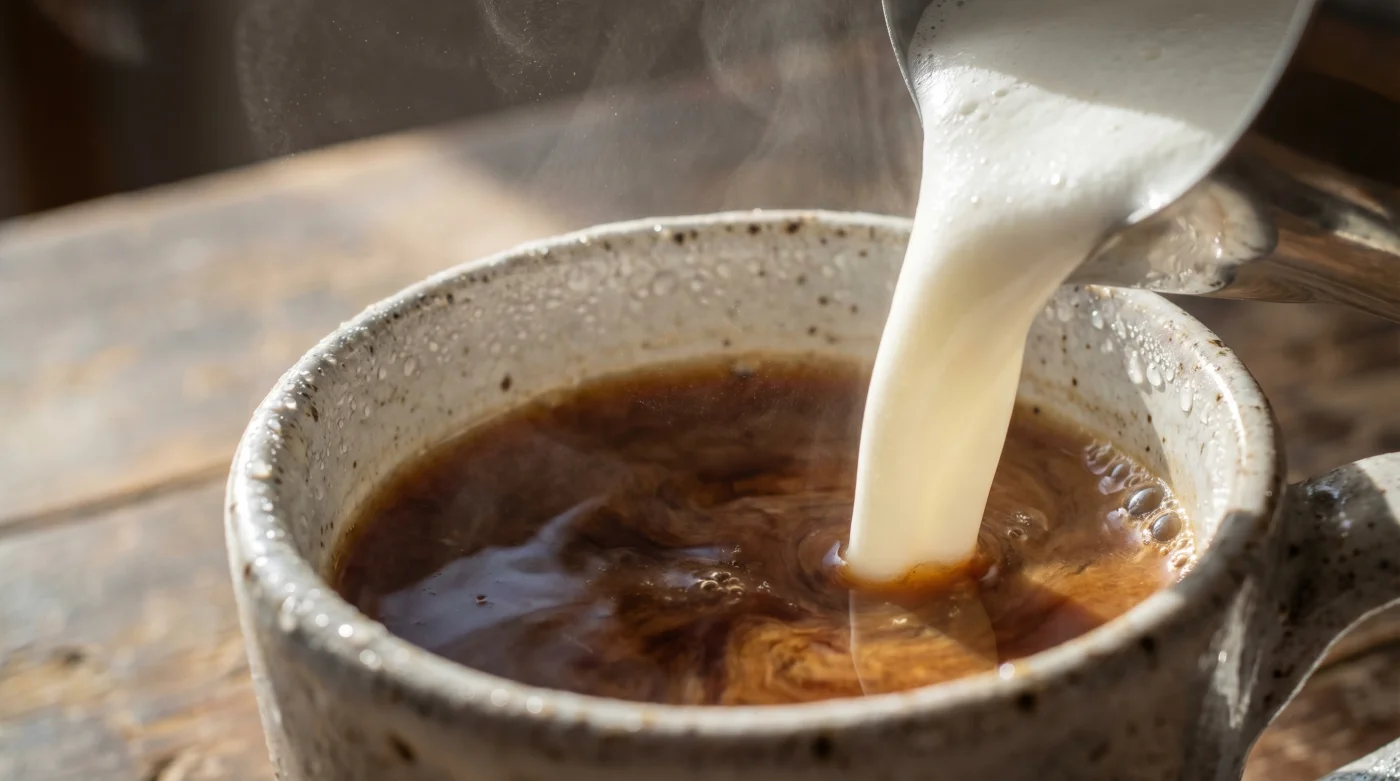
The morning chill sits heavy against the kitchen window. Frost edges the glass, blurring the streetlights outside, and the only sound in the house is the low, rhythmic hum of the burr grinder breaking down freshly roasted beans. The aroma hits the air almost instantly—a sharp, comforting bloom of dark cocoa, dried cherry, and toasted hazelnut. You pour the near-boiling water from the kettle, watching the dry grounds swell, bloom, and release their trapped gases into the quiet kitchen air.
You pull your favourite thick-walled ceramic mug from the cupboard, its weight reassuring and familiar in your palm. The brew is dark, steaming, and carefully extracted over a precise three-minute interval. You anticipate the first sip, the warmth spreading through your chest. Then, acting on sheer, unthinking muscle memory, you open the fridge. You casually pour a heavy dose of cold milk directly into the steaming liquid, watching the colour shift from deep black to pale brown.
In an instant, the rolling steam simply vanishes into thin air. The rich, mahogany surface turns a lukewarm, muddy beige, and the drink loses its entire visual vitality. Without meaning to, you have just committed a daily act of sabotage against your own comfort: shocking your meticulously crafted brew into utter submission.
It happens countless times a day in kitchens from Halifax to Vancouver. We spend small fortunes on premium, ethically sourced roasts, digital scales, and precise gooseneck kettles, only to drown the final product in a 4-degree Celsius dairy bath. The fix requires only a simple daily swap, yet it dramatically alters how you experience those precious, quiet moments before the demands of the day begin.
The Thermodynamics of Your Morning Mug
Think of your freshly brewed coffee as a delicate, relaxed muscle, newly warmed and pliable. Pouring fridge-cold milk over it is exactly like throwing a bucket of ice water onto someone peacefully stepping out of a hot cedar sauna. The structure seizes up immediately, retreating into itself.
The complex chemistry of the roasted bean relies heavily on stable temperature to maintain its flavour profile and aromatic balance. When a liquid drops from 90 Celsius to 55 Celsius in a matter of seconds, those volatile oils—the fragile compounds responsible for tasting notes like bright cherry, dark caramel, or cedar—contract and fall completely flat. You aren’t just cooling the drink down to a safe, drinkable state; you are muting its fundamental character.
By shifting your perspective and treating your cream as a co-ingredient rather than a hasty afterthought, a mundane chore is revealed as a major advantage. Warming the dairy before it hits the mug allows the lactose sugars in the milk to complement the natural, bright acidity of the roast, rather than fighting it in a clash of temperatures.
Meet Elias Thorne, a 42-year-old independent roaster working out of a converted brick warehouse in Montreal’s Mile End. Elias spends his days charting complex roasting curves and cupping obscure varietals, but his deepest professional frustration isn’t about sourcing green beans; it’s about what happens on residential countertops. ‘I watch people buy a twenty-dollar bag of single-origin Ethiopian,’ he says, leaning over a spinning cooling tray of freshly roasted beans, ‘and then they take it home and punch it in the face with milk that’s barely above freezing. If you just take thirty seconds to warm the dairy, the lactose sugars naturally open up. The milk should feel like a blanket, not a sudden, bitter frost.’
Dialling in the Dairy by Drink
Not all morning rituals look the same, and your approach to this tactile modification should adapt to your specific brew method. How you integrate this simple swap depends entirely on the equipment that sits on your counter.
For the Filter Purist
When you are pouring a delicate, paper-filtered drip or a meticulous Chemex, the dairy should barely whisper in the background. A small splash of lightly warmed whole milk or oat beverage is enough to cut the acidity without masking the delicate floral notes. You want the milk to rest just above room temperature, gently bridging the thermal gap between the hot water and your palate without weighing down the light body of the coffee.
For the French Press Devotee
This is a significantly heavier, more robust brew, carrying more natural sediment, body, and oil due to the metal mesh filter. It can handle a much more substantial addition of dairy. Here, heating the cream in a small saucepan until it just begins to tremble at the edges creates a rich, velvet texture that binds perfectly with the heavy, earthy body of the press.
For the Rush-Hour Commuter
If you are pouring your drink into a steel travel tumbler to fight morning traffic on the 401, you absolutely do not have time to monitor saucepans. A quick twenty seconds in the microwave in a heat-proof glass is all it really takes to prevent the cold shock. Your drink will stay piping hot all the way to the office, rather than turning tepid by the time you hit the first red light on your commute.
The Tactile Routine
The goal of this process is absolutely not to scald the milk. Boiling it alters the protein structure entirely, introducing a burnt, sulfurous taste that will overpower even the darkest coffee beans. You are aiming for a gentle, cohesive harmony between the two liquids.
Integrating this simple swap into your groggy morning routine requires minimal physical effort but yields an immediate payoff. Treat the preparation of the milk with the exact same respect you give to boiling the filtered water or weighing out the beans.
- Measure your usual dairy portion into a small, heat-safe vessel before you even start brewing the coffee, making it a seamless part of the prep phase.
- Apply gentle heat. If using a microwave, stick to short intervals of 15 to 20 seconds. If using a stovetop, pull the pan off the burner the exact moment tiny bubbles form around the outer edge.
- Pour the warmed milk slowly into the mug, letting it fold gently into the dark liquid without aggressive stirring, preserving the crema.
Your tactical toolkit for this routine is wonderfully minimalist. You only need a target milk temperature of roughly 60 to 65 Celsius, and a small steel frothing pitcher or a simple microwave-safe glass measuring cup kept next to your machine.
A Quieter Start to the Day
Refining this small, highly mechanical action does much more than simply keep your drink hot in the ceramic mug. It actively forces a momentary, deliberate pause in the middle of a typically frantic morning rush. You stop reacting and start intentionally preparing.
By paying close attention to the physical temperature of your cream, you are claiming a fraction of the morning just for yourself. You ensure that the very first thing you consume is treated with quiet respect, shifting the narrative of the morning from a chaotic dash to a measured, intentional process.
A hot, un-shocked cup of coffee doesn’t just taste significantly better on the tongue. It sets a physical and mental tone of deliberate care that echoes quietly through the rest of your day, long after the mug is empty.
‘A hot drink is a promise of comfort; don’t break that promise at the final second with a cold pour.’
| Key Point | Detail | Added Value for the Reader |
|---|---|---|
| Temperature Shock | Cold dairy drops the brew temp by 30+ degrees instantly. | Maintains the intended flavour profile and aroma. |
| Lactose Sweetness | Warming milk to 60°C enhances natural sugars. | Reduces the need for processed sugars or syrups. |
| Heat Retention | Pre-warmed dairy preserves the thermal mass of the mug. | Keeps your drink pleasantly hot for significantly longer. |
Frequent Frustrations Solved
Will microwaving the milk ruin its texture?
Not if you keep it brief. Aim for 15 to 20 seconds just to remove the chill. Boiling it will destroy the texture, but a gentle warming is perfectly safe.
Does this apply to non-dairy alternatives?
Absolutely. Oat and almond beverages benefit immensely from being warmed, as cold shocks can often cause them to curdle or separate in highly acidic coffee.
Do I need a thermometer?
No. Use your senses. The vessel should feel warm to the touch, and the surface of the liquid should just barely begin to steam.
What if I use a thermal travel mug?
Warming the milk is even more critical here. Cold milk lowers the starting temperature, drastically reducing how long the thermal vacuum can keep the liquid hot.
Can I just add more hot water to compensate?
Adding extra water will over-dilute the brew, destroying the body and mouthfeel. Focus on the temperature of the dairy instead.