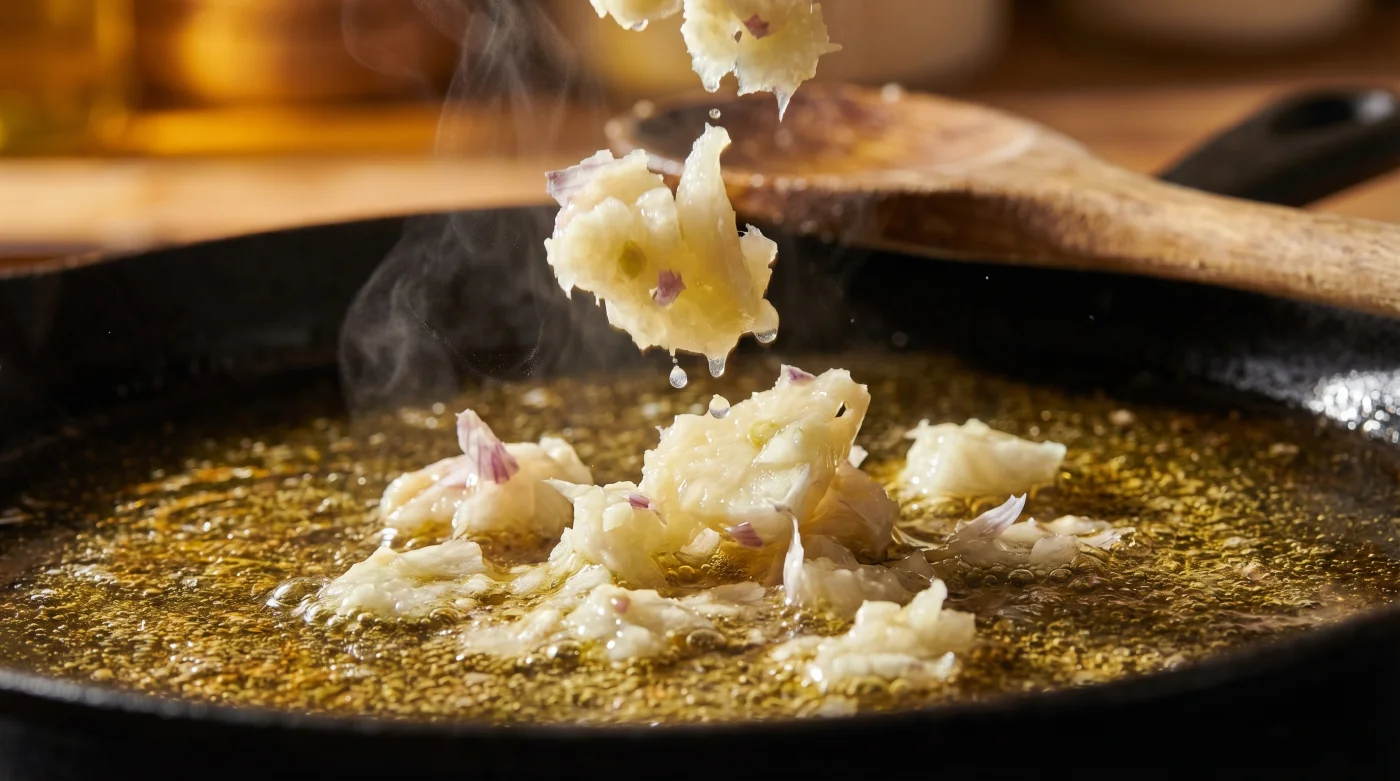
You know the rhythm by heart. A cold Tuesday evening, frost tracing the edge of the kitchen window, and a familiar sizzle as a glug of canola oil hits the pan. You toss in the diced onions, followed almost immediately by a heap of minced garlic, watching them sweat together until the kitchen smells like comfort. It is the sequence you learned from family, from television, and from practically every recipe card you have ever skimmed.
But there is a hidden cost to this automatic sequence. By the time your chicken or tomatoes hit that hot pan, that fragrant allium has already surrendered its best qualities, leaving behind a dulled, sometimes bitter ghost of what it could have been. We burn it, we boil it, and we wonder why our home cooking never quite carries the sharp, vibrant punch of a restaurant dish.
Think of the way a raw clove smells when your knife first breaches its skin—sharp, pungent, alive. Now think of the muted, slightly scorched bits stuck to the bottom of your skillet after twenty minutes of simmering. We treat this ingredient like a foundational building block when we should be treating it like a fragile finishing herb.
If you want to radically shift your dinner, you need to break the oldest rule in home cooking. The secret isn’t buying more expensive ingredients or spending three hours reducing a stock; it is holding that crushed bulb back until the absolute final moments of heat.
Rethinking the Foundation
Imagine building a fire. You do not toss your delicate, fast-burning kindling into the roaring centre of the coals and expect it to survive. Cooking alliums operates under the exact same laws of physics. They contain volatile oils and sulfur compounds that react instantly to heat, shifting in structure the longer they are exposed to friction and flame.
When you throw it into hot fat at the beginning of your prep, you are boiling away its soul. The longer it cooks, the more those sharp, bright top notes degrade into a murky background warmth. When you overcook alliums, it is like the flavour is breathing through a pillow—muffled, suffocated, and losing the exact punch you added it for in the first place.
Shifting your timing changes the architecture of your meal. Adding it right as the pan comes off the heat allows the residual warmth to gently bloom the oils, releasing a fragrance that hits your palate the second you take a bite, rather than getting lost in the heavy sauce.
Consider the quiet routine of Marceline, a 48-year-old line cook at a bustling bistro in Montreal’s Plateau neighbourhood. While the prep cooks mince kilos of garlic every morning for the marinades, Marceline keeps a small, fresh pile strictly for the final minute of plating. She presses a single clove directly into the buttery pan juices of a roasted duck or folds it into wilted chard just as the heat shuts off. “The garlic should not cook,” she insists, scraping her blade across the board. “It should only wake up.”
Dialing in the Intensity
Not every dish requires the same level of aggression. Knowing when to introduce your crushed cloves depends entirely on how loud you want that flavour to sing. Understanding these subtle adjustment layers will change how you approach every meal.
For the Weeknight Pragmatist: If you are simmering a Tuesday night Bolognese or a quick pot of chili, pull your pot completely off the element. Stir your freshly crushed cloves directly into the hot sauce, letting the residual 90-degree Celsius heat temper the bite without killing the flavour. It creates a robust, lingering warmth.
For the Purist: When making a pan sauce or a quick stir-fry, wait until the protein is resting on a side plate. Use the warm, empty pan to gently swirl a knob of butter and your crushed clove for exactly thirty seconds off the heat. The cream should tremble, not boil, coaxing out a delicate, floral aroma.
For the Texture Seeker: Sometimes you want the crunch and the visual appeal. If you are baking a focaccia or roasting root vegetables, infuse your olive oil with whole crushed cloves in a cold bowl beforehand. Brush that deeply flavoured oil over your food right before serving, bypassing the harsh oven temperatures entirely.
The Late-Stage Integration
Executing this timing requires a slight physical adjustment to your prep routine. You can no longer rely on the mindless dump-and-stir method that most of us fall back on when we are tired after a long workday.
Instead, prepare your base aromatics first, and leave the garlic untouched on your cutting board until the final phase of your cooking process. The less time it spends exposed to the air once crushed, the better.
Let’s break down the mindful sequence:
- Mince your onions, celery, and carrots and start cooking them as usual in your fat of choice.
- Leave your garlic clove whole until the last possible minute to prevent the sulfur compounds from oxidizing on the board.
- When your dish is sixty seconds from completion, crush the clove flat with the side of your blade to crack the cell walls and release the oils.
- Mince quickly, stir into the warm food, and immediately remove the pan from the heat source to let it steep.
Your Tactical Toolkit: A sharp chef’s knife, a heavy bench scraper for gathering the mince swiftly, and an instinct for residual heat. If your cooking liquid is aggressively bubbling above 100 Celsius, it is too hot; let it rest for a brief moment before folding in your aromatics.
A Quieter Way to Cook
Cooking at home often feels like a race against the clock to get everything into the pot as fast as possible. We load the pan, hoping that time and heat will magically organize the flavours for us while we set the table or answer a text.
But reclaiming this one ingredient forces a moment of intentional pause. It asks you to pay attention to the exact moment a dish is finished, rather than walking away while it bubbles away on the stove. You have to be present for that final minute.
When you finally sit down to eat, the difference is immediate and undeniable. The flavour is brighter, the aroma is cleaner, and the effort required was actually less than before. You stop fighting the chemistry of your food and start working alongside it, creating plates that taste vibrant, alive, and distinctly yours.
“We spend so much time worrying about the roaring heat of the pan, we completely forget the transformative power of lingering warmth.”
| Method | Timing of Addition | Value for Your Palate |
|---|---|---|
| The Standard Base | First 5 minutes of cooking | Provides a mellow, sweet background note, but loses distinct character and risks turning bitter if the pan is too hot. |
| The Mid-Way Stir | Added with broths or liquids | Creates a generalized savoury warmth, suitable for slow braises but lacks a fresh aromatic punch. |
| The Residual Bloom | Final 60 seconds, off the heat | Delivers a bright, floral, restaurant-quality aroma that immediately hits your senses upon taking a bite. |
Frequently Asked Questions
Won’t the garlic be too spicy or harsh if it isn’t cooked?
Not at all. Stirring it into a hot pan or warm sauce off the direct heat provides enough gentle warmth to mellow the sharp allicin compounds without destroying the delicate oils.Does this technique work for slow-roasted dishes?
For long roasts, you can use whole heads in the oven for sweetness, but for that signature punch, press one fresh clove into the resting pan juices right before you carve the meat.What if I am using powdered spices instead of fresh cloves?
Powders are already dehydrated and lack volatile oils. They need early moisture to rehydrate, so stick to adding powders early in the cooking process. This trick is strictly for fresh bulbs.How fine should I crush or chop the clove?
The finer you mince, the stronger the flavour. For a gentle background note, simply smash the clove flat with your knife and swirl it in the warm sauce whole.Can I use a garlic press for this method?
Yes, a press ruptures more cell walls, creating a very intense paste. If using a press, you need even less heat—just fold it into the finished dish exactly as it hits the serving bowl.