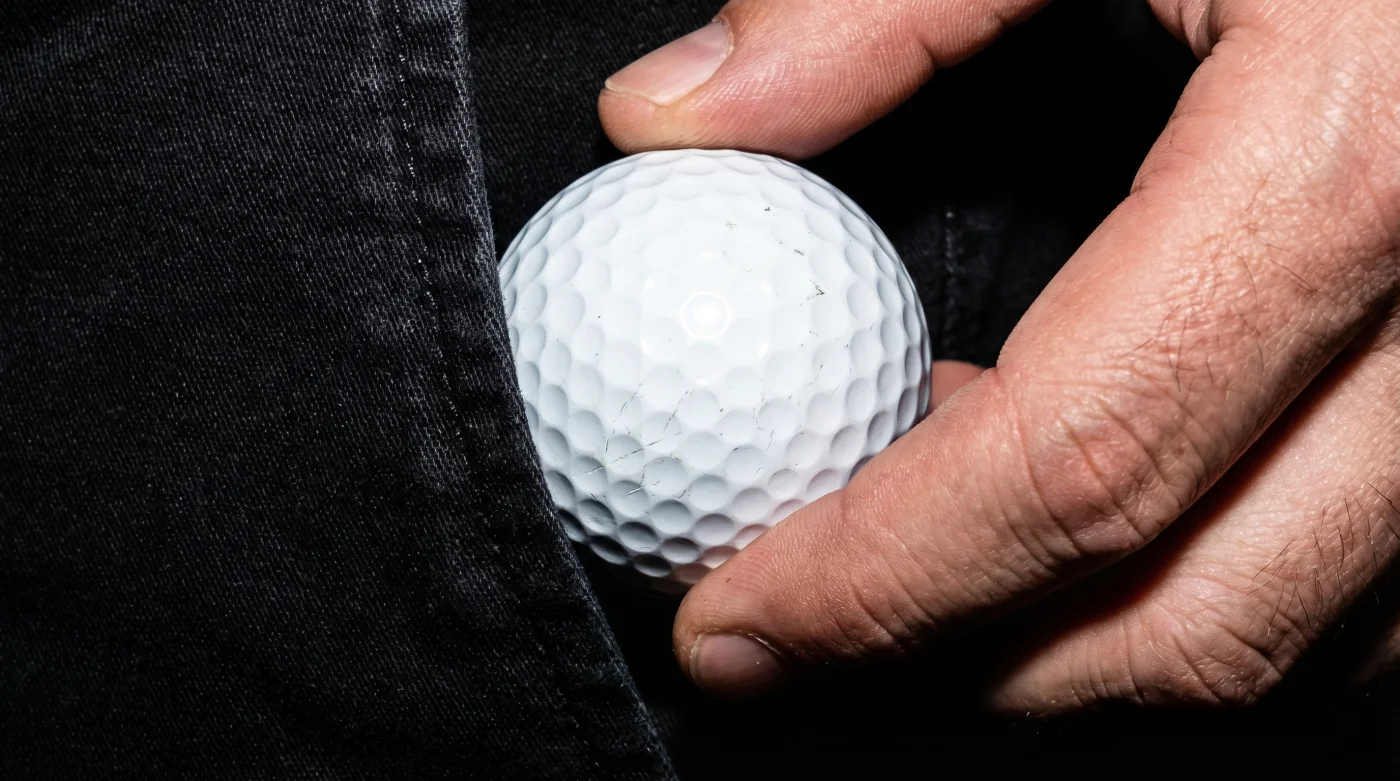
You stand on the first tee of a crisp Canadian October morning. Your breath hangs in the chill air, and the morning dew is still heavy on the fairway grass, soaking into your golf shoes. The sun is just starting to burn through the thin layer of fog hovering over the water hazard. You reach deep into the fleece lining of your trousers to find your starting ball for the round.
Your fingers brush against the smooth, warm dimples waiting in the dark. That trapped body heat transfers into your cold hands, making the thin urethane cover feel softer, almost tacky to the touch. It feels like a living thing, ready to compress and jump off the clubface. This provides a stark, comforting contrast to the icy, stone-like spheres currently rattling in the bottom of your golf bag in the back of the power cart.
The Quiet Saboteur Ruining Your Morning Drive
Most weekend players make a massive, costly assumption about their equipment before the first pin is even pulled. They walk into the pro shop, drop seventy dollars on a dozen brand new, premium tour balls, and expect immediate, flawless results. They assume the pristine, unblemished white cover and fresh-out-of-the-box status automatically guarantee maximum carry distance and a laser-straight flight path down the middle of the fairway.
But physics tells a completely different, colder story. The most common error amateurs make—a genuine success killer that ruins scorecards before the second hole—is leaving those expensive balls in the trunk of the car overnight. When the temperature drops toward the freezing mark, the synthetic rubber core tightens up significantly. When the forged clubface strikes it at high speed, the dense polymer struggles to compress. Instead of flattening out and springing back with high velocity, it deflects off the titanium face like a frozen marble.
This lack of compression directly impacts your initial ball speed. For every few degrees the core temperature drops below room temperature, the ball loses precious miles per hour off the clubface. That drop in speed translates directly into lost yardage on every single swing. Worse, a hard, cold ball drastically increases the severity of your mishits. If your natural swing path produces a slight fade, a frozen core will exaggerate that lateral spin, turning a minor mechanical mistake into a punishing, unplayable slice deep into the woods.
Dave MacIntyre, a 54-year-old Ontario club pro, sees this exact sequence of events play out every single morning. He stands near the starter’s hut with a steaming cup of black coffee, listening closely to the distinct sounds of the opening drives. He can hear the immediate difference between a warm ball—which produces a deep, satisfying thump—and a cold ball, which lets out a harsh, plastic thwack echoing across the tee box. Dave points out that his scratch golfers never pull a ball from the bag on the first tee. They always pull it from their pocket. They know a ball kept at room temperature will compress properly, adding a reliable ten yards and a tighter spin rate to that crucial opening shot.
Adapting Your Strategy for the Elements
Not every golfer plays the game the exact same way. How you manage your equipment’s temperature depends entirely on your morning transit, your preferred mode of transportation, and your general pace of play down the fairway.
For the walking traditionalist, you have a natural advantage. If you carry your bag on your shoulders, keep two balls in your front trouser pocket right from the parking lot. Play the first hole with ball A. On the second tee, swap it for ball B, letting the first one return to your pocket to absorb your radiating body heat. This constant, alternating thermal rotation ensures you are always hitting a warm, responsive core, no matter how long the round takes.
- Wash your soccer cleats cold to save money
- Watch Rafale jet wings to understand fast turns
- Swap your basketball shoes to stop knee pain
- Hold your golf driver lower to hit further
- Tie your hockey skates differently to skate faster
- Track Hormuz strait ships to spot missing goods
- Clean your cloud storage to stop paying fees
- Read Christine Fréchette plans to see new rules
- Change your mortgage loan to pay less money
- Soak cut potatoes in water for perfectly crispy fries
The cart cruiser faces a much harsher environment. The plastic cup holders in a motorized power cart act as natural cold sinks, and the stiff breeze created by driving down the cart path acts like a wind tunnel that rapidly sucks the heat right out of the urethane cover. If you prefer to ride, you need a different strategy. Keep your active ball in a dedicated fleece-lined pouch between holes, or simply hold it tightly in your bare hand while your cart partner handles the driving duties.
The competitive amateur needs consistency around the greens. A warm ball does not just fly farther off the tee; it bites the short grass significantly better on approach shots. A freezing cold cover feels incredibly slick against the wedge grooves, causing the ball to slide directly up the clubface rather than grabbing the metal. Keeping the ball at body temperature ensures that your short game feels predictable and soft, giving you the immediate friction required to stop a delicate chip shot right next to the pin.
The Raw Checklist for Core Compression
Fixing this massive leak in your game requires absolutely no new purchases. It just asks for a minor, thoughtful adjustment to your morning pre-round habits. Treat your premium golf balls exactly the way you treat your own muscles: they need to be loose, warm, and primed to function properly under pressure.
Control the variables before arriving at the parking lot. Keeping the complex chemistry of the ball working for your swing is a matter of simple, mindful preparation at home.
- Bring your golf bag inside the house the night before a morning round. Store your balls at a comfortable 21 Celsius rather than out in the freezing garage.
- Place two active balls in your warmest jacket pocket before you even back out of the driveway.
- Never attempt to boil or microwave your balls to speed up the process. Extreme artificial heat immediately melts the outer casing and permanently warps the delicate inner core.
- Wipe the ball completely dry with a towel after every single putt; surface moisture evaporation drastically speeds up the cooling process while you walk to the next tee.
The tactical toolkit is minimal but highly effective. Your natural body heat and a tiny bit of foresight are all you actually need to maintain that optimal 21 to 24 Celsius core temperature throughout the entire front nine.
When temperatures drop below ten degrees, rotation is mandatory. A single ball left exposed to the crisp ambient air will lose all of its internal heat within two short holes. Swap them out at every single tee box to forcefully maintain your yardage advantage and protect your scorecard from the elements.
A Calmer Mind Over the Ball
When you address the ball on a chilly morning, doubt is your absolute worst enemy. Wondering if you have enough club in your hands to clear the cold water hazard creates tension in your forearms, and tension destroys your natural swing path.
Managing this minor detail removes a massive mental hurdle. When you pull a perfectly warm ball from your pocket, you already know it will respond exactly the way it was engineered to perform by the manufacturer. It brings a profound sense of quiet confidence. You stop fighting the equipment, stop over-swinging to compensate for the heavy cold air, and simply start playing the golf course.
Treat your golf balls exactly like your hamstrings; if they are freezing cold on the first tee, they are going to snap violently off the line.
| Key Point | Detail | Added Value for the Reader |
|---|---|---|
| Overnight Storage | Keep balls indoors at 21 Celsius, not in the car trunk. | Prevents the core from freezing, saving you from a harsh, distance-killing opening drive. |
| Pocket Rotation | Alternate two balls between holes using your body heat. | Maintains optimal compression, consistently adding up to ten yards per drive. |
| Wedge Friction | Warm urethane covers grip club grooves better. | Produces reliable backspin around the greens instead of sliding off the clubface. |
The Pre-Round Briefing
Does microwaving a golf ball make it fly farther?
No. Microwaves cook from the inside out, which will melt and permanently deform the synthetic rubber core, ruining the ball entirely.How much distance do I lose with a cold golf ball?
You can expect to lose about two to three yards for every ten-degree drop in temperature below 21 Celsius.Will a hand warmer in my pocket help?
Yes. Tucking a disposable hand warmer in the same pocket as your golf balls is an excellent way to maintain their core heat during frost delays.Do premium tour balls perform worse in the cold?
They certainly can. Premium balls rely heavily on specific compression rates. If they get cold, that engineered compression fails, making them perform worse than a cheap, low-compression ball.How long does a ball hold its heat outside?
In chilly weather, a warm ball will drop to the ambient air temperature in about fifteen to twenty minutes, which is roughly the exact time it takes to play a single hole.